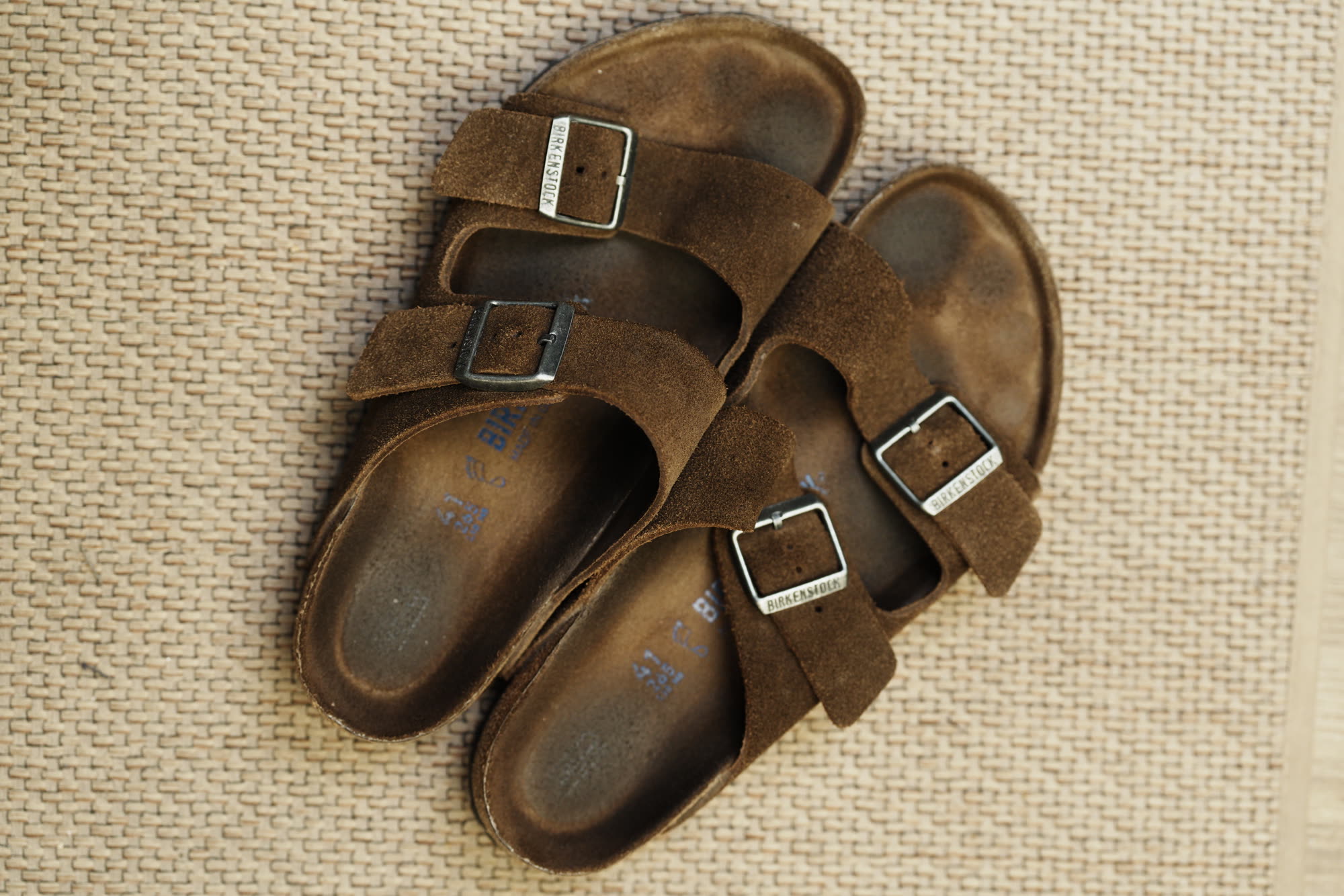
Guide · November 2026 · 6 min read
How to Clean Birkenstocks Properly: Footbed, Straps and Cork
Cleaning the footbed, caring for each strap material, resealing the cork and adding a nano water protector — in the order a shoe care workshop follows, and that you can follow at home.
A pair of Birkenstocks can last 5–10 years if it is looked after properly. Most pairs that fail early don't fail from wear. They fail because they were washed like canvas shoes, dried in the sun, or left with cork that dried out and cracked without anyone noticing.
Before you clean them, it helps to know what they are made of. Each layer needs its own treatment:
| Layer | Material | What to remember |
|---|---|---|
| Footbed liner | Suede | Absorbs sweat and darkens where your foot sits |
| Footbed | Cork mixed with natural latex | Dislikes soaking and heat; cracks when it dries out |
| Straps | Smooth leather, suede/nubuck, oiled leather, Birko-Flor (synthetic) | Each material needs its own cleaner |
| Outsole | EVA | Durable and washable, but wears down over time |
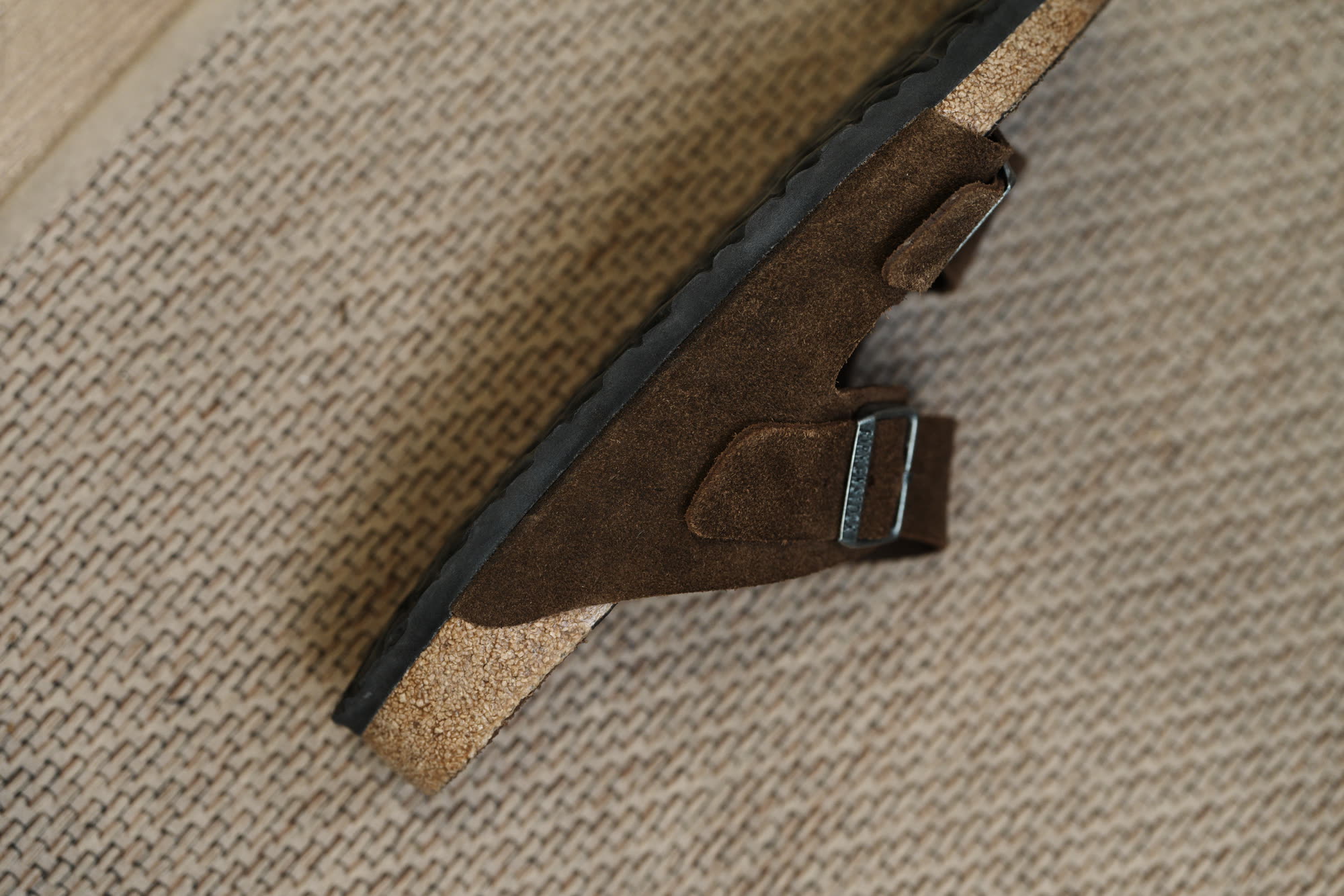
This guide follows the same order the Marcher shoe care workshop in Saigon uses every day on clients' Birkenstocks: footbed first, straps next, then the cork seal and a protective coat last. You can do all of it at home.
1. Clean the Footbed
A dark footbed is sweat, skin oil and dust soaked into the suede. The aim is to lift the dirt out with foam, without letting water soak into the cork underneath.
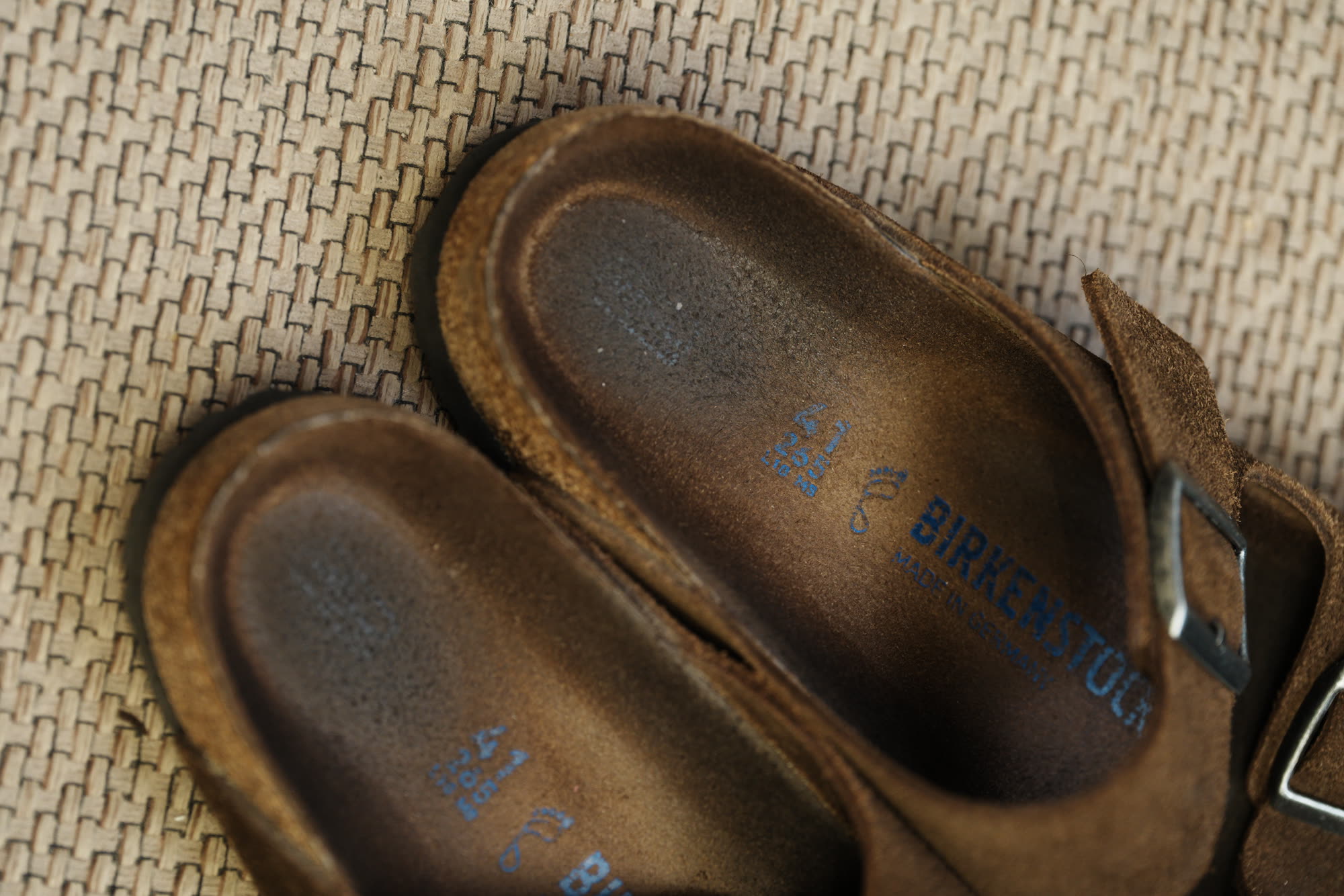
You need: a suede brush (brass or rubber bristles), a suede cleaner, a microfibre cloth, and newspaper or shoe-stuffing paper.
- Dry-brush the whole footbed in one direction to lift dust and raise the nap of the suede.
- For hard, shiny dark patches, rub gently with a suede eraser first.
- Put suede cleaner on a damp brush (never pour it on the sandal) and work it in small circles into a foam.
- Wipe the foam away with a well-wrung microfibre cloth. Repeat if it is still dark rather than scrubbing hard once.
- Let them air-dry somewhere airy, out of the sun and away from a dryer, for at least 24 hours.
- Once fully dry, brush them again so the nap is soft and even.
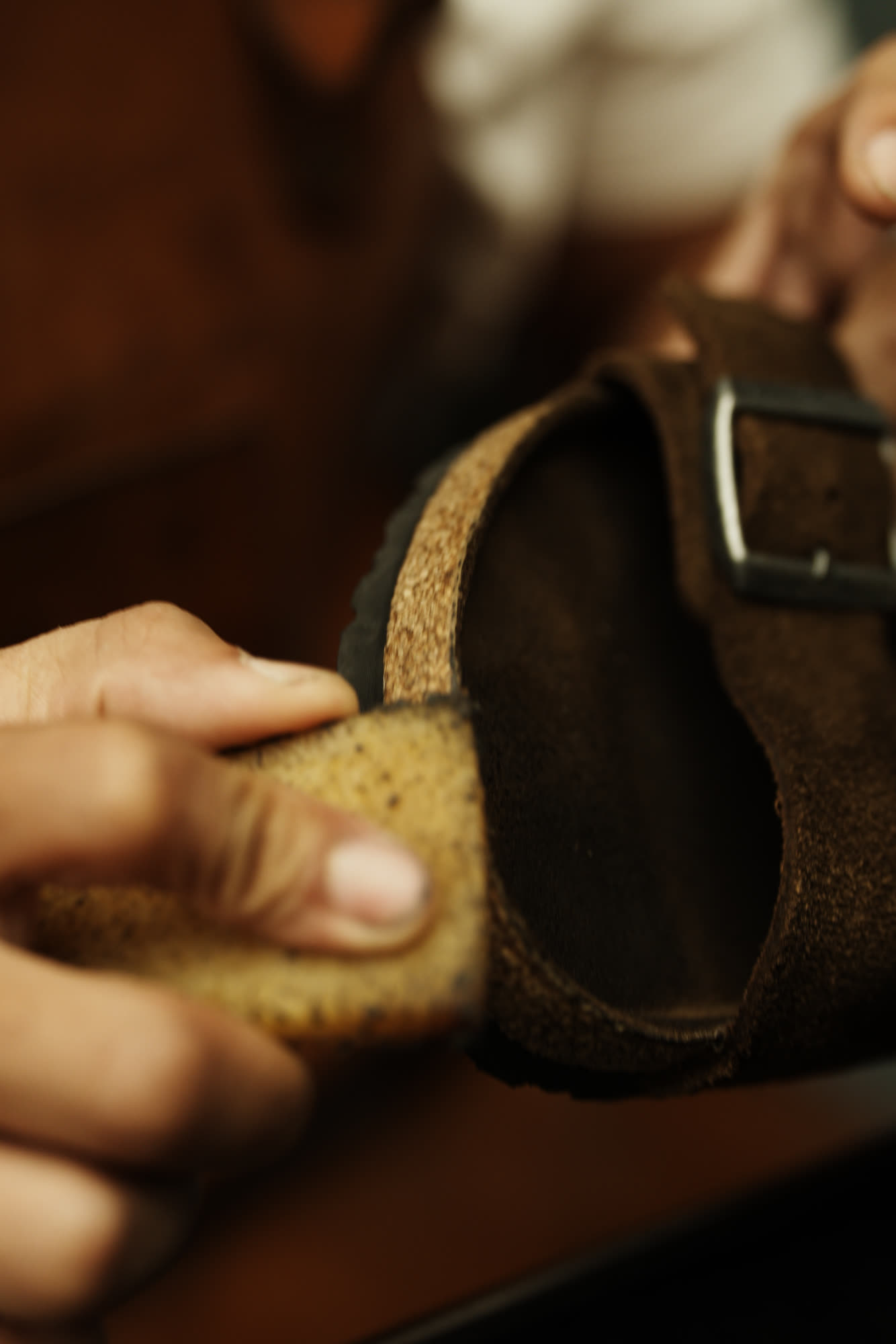
Odour: once dry, mist on a thin layer of shoe deodoriser. Don't put damp baking soda on suede; it tends to leave white marks.
Note: a footbed that has been dark for years will get visibly cleaner but rarely back to new, because sweat has changed the colour of the suede. If the liner has worn smooth and you can feel the cork through it, it is time to replace the liner.
2. Clean the Straps
Check the inside of the strap or the stamp on the footbed to find the material. The wrong cleaner is the quickest way to ruin a strap.
| Strap material | How to clean | Aftercare |
|---|---|---|
| Suede / nubuck | Dry-brush, erase marks, then foam with suede cleaner as for the footbed | Brush up the nap, add a water protector |
| Smooth leather | A damp cloth with a mild leather cleaner, following the grain | A thin coat of leather cream, left to absorb, then buffed with a cloth |
| Oiled leather | Wipe off dust with a damp cloth; no strong cleaners | Oiled-leather wax or oil to bring back the sheen |
| Birko-Flor | Warm water with a little mild soap, soft cloth | No conditioning needed; just dry it off |
| EVA (all-rubber pairs) | Wash directly with soap and water | None; keep them out of strong sun, which shrinks them |
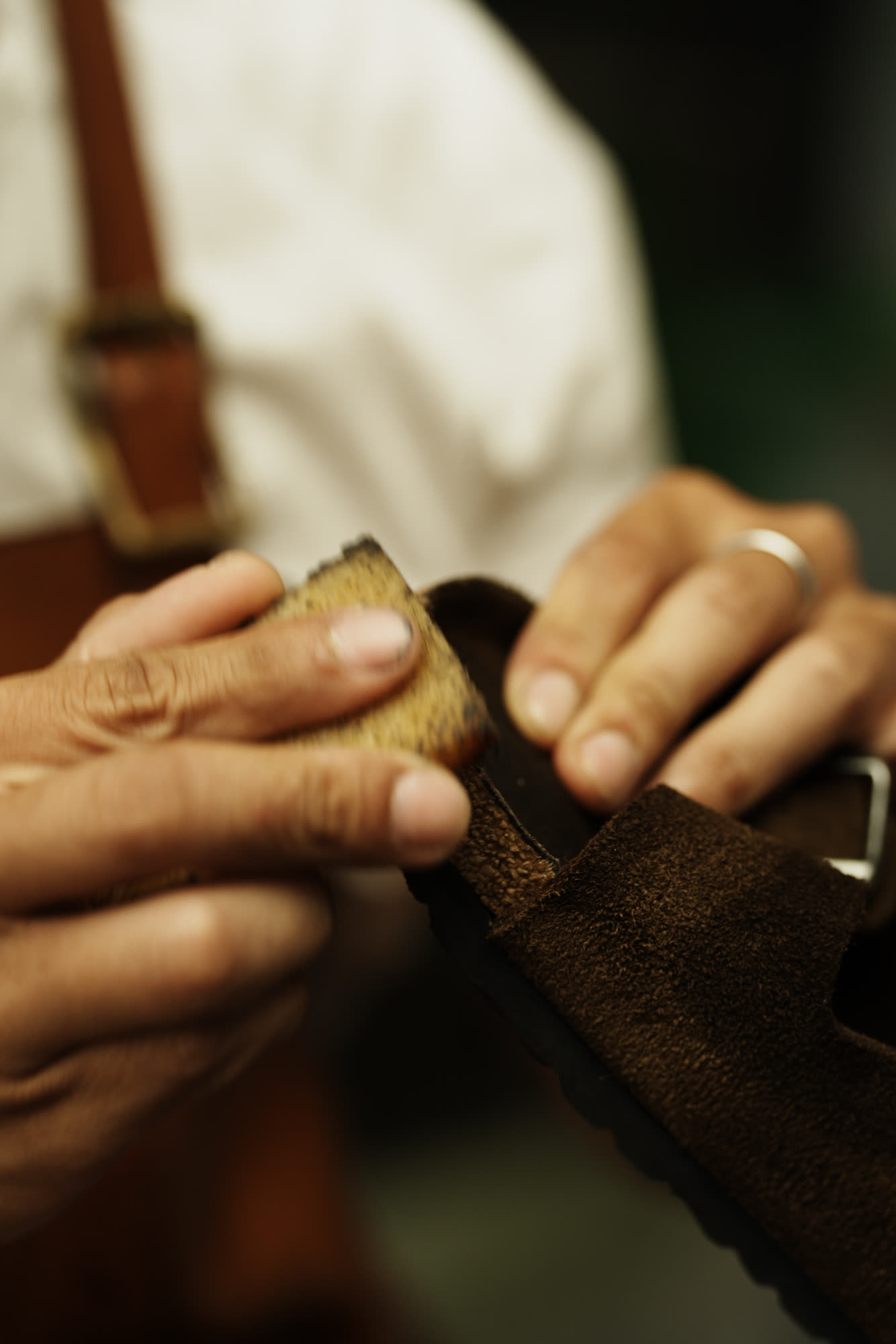
Metal buckles: wipe them with a dry cloth, and cover them when you spray anything so you don't leave a stain around the buckle holes.
With light suede (Taupe, Stone, white), always test the cleaner on the inside of a strap first. These are the colours most likely to blotch when you do it yourself.
3. Reseal the Cork — the Step Most People Skip
New cork has a glossy seal on the outside. Once it wears off, the cork dries, crumbles and cracks at the edges — and that can't be undone. Resealing means applying a fresh coat of cork sealer to lock in moisture and keep the cork supple.
Signs it needs resealing: the cork edge has lost its sheen, feels dry and rough, and fine hairline cracks are starting. In a hot, humid climate like Saigon's, with daily wear, that is usually every 3–4 months.
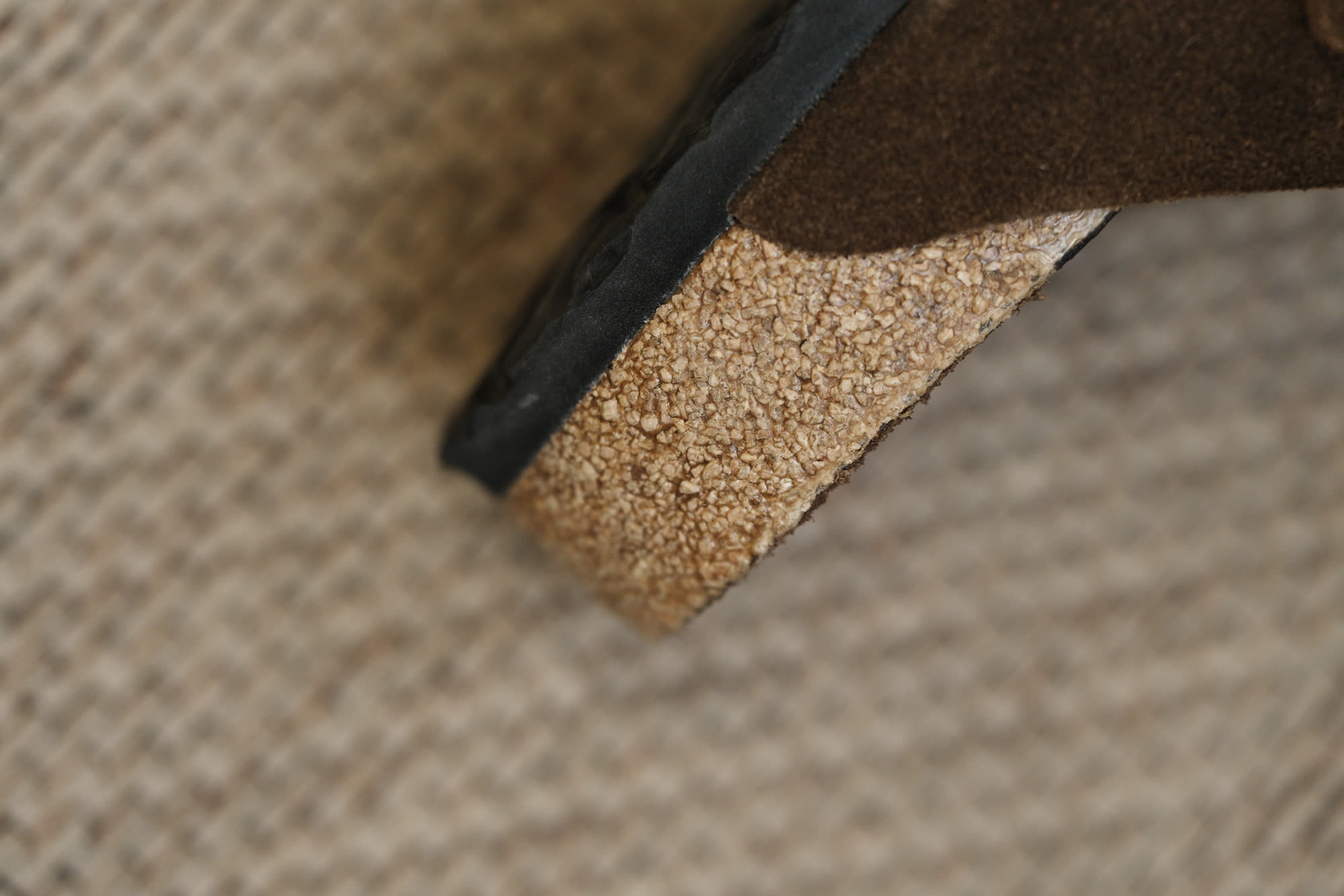
- Clean the sandals and let them dry completely first (after steps 1 and 2).
- Wipe the dust off the exposed cork with a dry cloth.
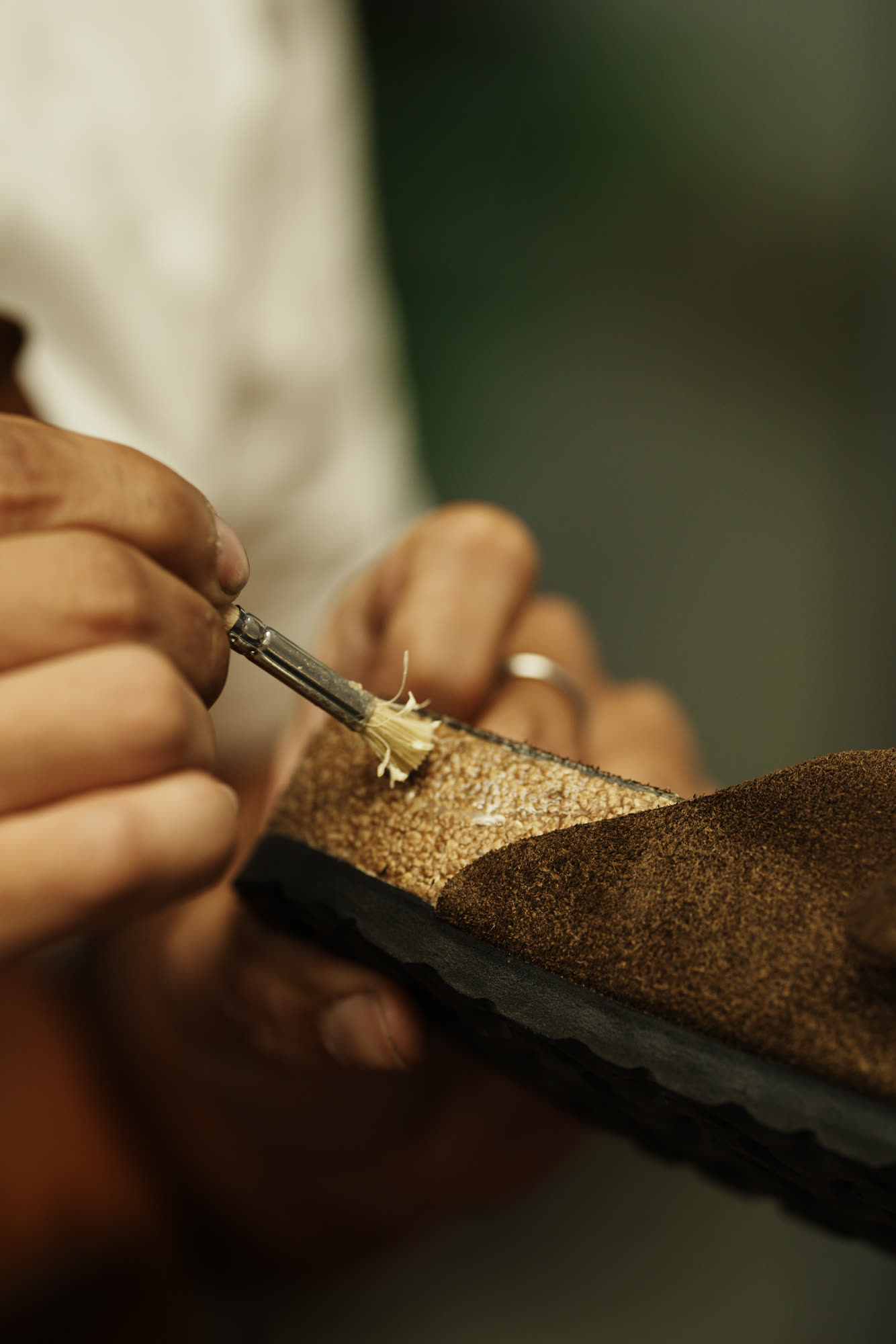
- If you're new to this, run masking tape along the edge of the liner and the EVA sole.
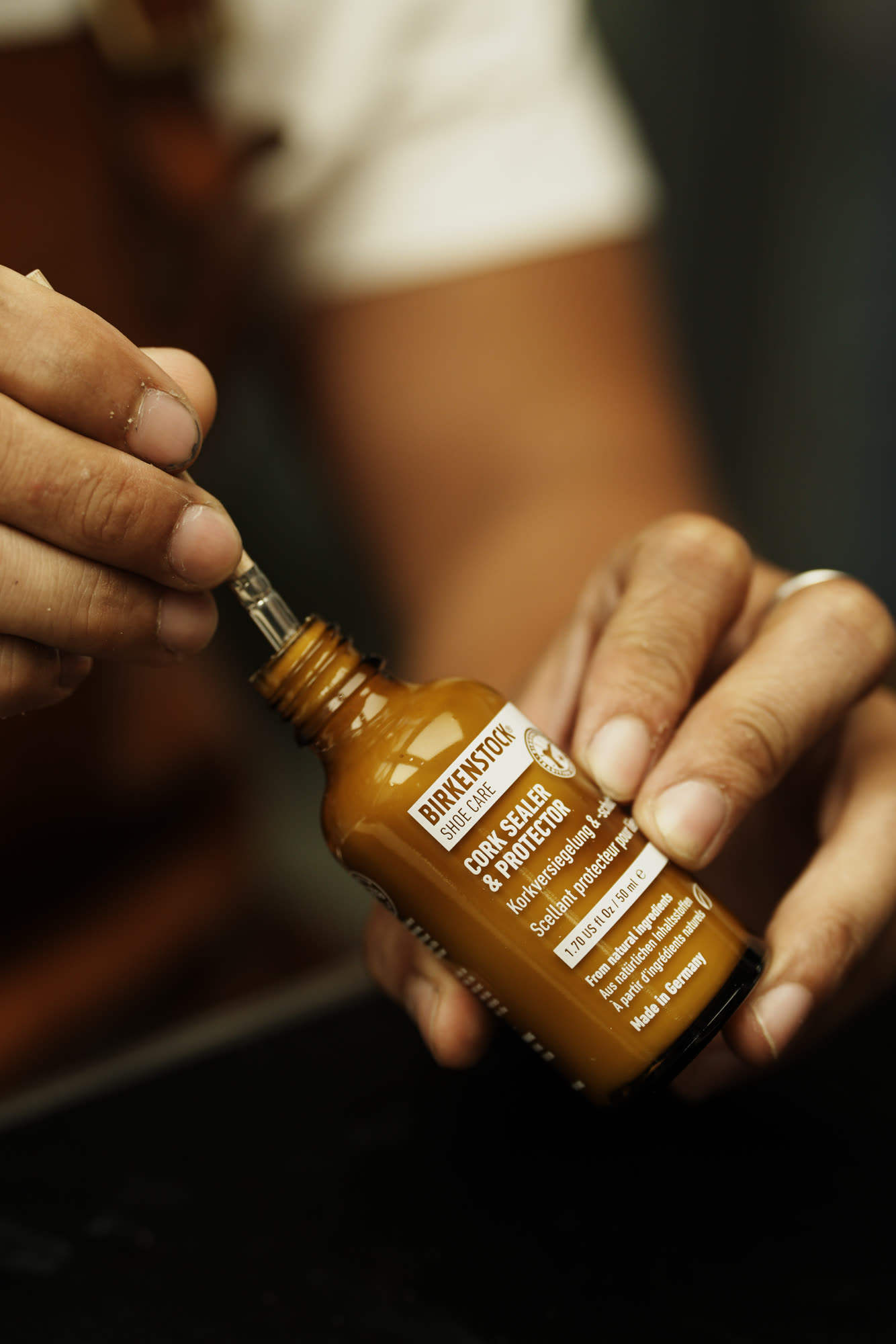
- Brush on a thin, even coat of cork sealer, on the cork only. Keep it off the suede liner.
- Let it dry for about an hour; if the cork was very dry, add a second coat.
- Leave them overnight before wearing.
If the cork has cracked deeply or broken off in chunks, sealer is no longer enough. It needs a cork repair, a new liner or a new sole at a workshop.
4. Add a Nano Protector
A nano protector leaves an ultra-thin water-repellent film on the leather, so rain, coffee and oil bead up and roll off instead of soaking in. The leather still breathes, and the colour and feel don't change. In Saigon's rainy season, it's the most worthwhile step for suede straps and footbeds.
- Spray only when the sandals are clean and completely dry; spraying over dirt seals the dirt in.
- Shake well and spray from 20–30 cm in one thin, even coat over the straps and footbed.
- Let it dry for 15–30 minutes, then add a second coat.
- Wait 24 hours before wearing them in the rain.
- Reapply after every clean, or when water stops beading.
How We Do It at Marcher
At the Marcher workshop, every pair of Birkenstocks goes through all four steps above, using Birkenstock's own genuine care products (Cork Sealer & Protector for the cork) and Saphir Médaille d'Or for the leather straps and footbeds. We stick to the products the maker recommends because cork and a suede footbed react very differently from ordinary shoe leather. Cleaning, cork resealing and nano protection together start at 549,000₫ and take 1–2 days. If the cork has broken, the liner is worn through or the EVA sole has worn down to the cork, we replace the liner and the sole as well.
What Not to Do
- Don't machine-wash or soak them (EVA pairs excepted). Waterlogged cork swells, the glue lets go and the footbed loses its shape.
- Don't dry them in the sun, with a dryer, or leave them in a car boot. Heat shrinks and cracks the cork and softens the footbed glue.
- Don't use bleach, dish soap or alcohol on suede.
- Don't use a stiff brush on smooth leather.
A Simple Care Schedule
| How often | What to do |
|---|---|
| After every soaking | Wipe dry, stuff with paper, leave somewhere airy |
| Weekly | Dry-brush the footbed and straps |
| Every 1–2 months | Clean the footbed, reapply the nano protector |
| Every 3–4 months | Reseal the cork |
When to Take Them to a Workshop
Home care is enough for everyday upkeep. A few cases are better left to a craftsman:
- Footbeds dark for years that didn't come up with cleaning
- Light suede straps with blotches, oil or ink
- Deeply cracked cork, or an EVA sole worn down to the cork
- An expensive pair (a suede Boston, a shearling Arizona, a collaboration) you'd rather not experiment on
Marcher cleans and restores Birkenstocks in Saigon, with pickup and delivery in the city centre. Send a photo of your pair to +84 339 400 317 for a quote first.
Frequently Asked Questions
Can I put Birkenstocks in the washing machine?
No, unless they are the all-EVA pairs. Water and spinning swell the cork, loosen the glue and ruin the suede footbed liner.
Can a black footbed be cleaned back to its original colour?
It gets visibly cleaner, but a pair worn for years rarely returns to its new colour, because sweat has already changed the colour of the suede.
How often should I reseal the cork?
About every 3–4 months if you wear them daily, or as soon as the cork edge loses its sheen.
Does a nano protector change the colour of suede?
Not noticeably, if you spray thin coats from the right distance. On light colours, test it on the inside of a strap first.
Where can I get Birkenstocks cleaned in Saigon?
Marcher cleans, reseals and nano-protects Birkenstocks with genuine Birkenstock and Saphir products, from 549,000₫, ready in 1–2 days, with pickup and delivery in the city centre. Call or message +84 339 400 317.