Craft · 10 June 2026 · 8 min read
Why Hand-Polishing Still Beats Any Machine
There is a machine in almost every shoe repair shop in Saigon that spins a cylindrical brush at a few hundred RPM. Feed a shoe into it, and thirty seconds later the leather looks shiny. The owner is satisfied. The shoe is not.
What that machine cannot do — what no machine has ever done — is think.
Pressure Is a Conversation
When a craftsman polishes a shoe by hand, the pressure he applies is not constant.
It changes depending on what his fingertips feel beneath the cloth. Over a crease, he eases. Over a scuff, he works in small circles, building heat gradually.
On the toe cap, where mirror shine lives, he uses the weight of his breath more than his hand.
A machine applies the same pressure everywhere. It does not feel the dry patch near the heel or the soft spot where the leather has begun to thin. It simply spins.
"A machine polishes leather. A craftsman polishes intention."
Heat That Belongs There
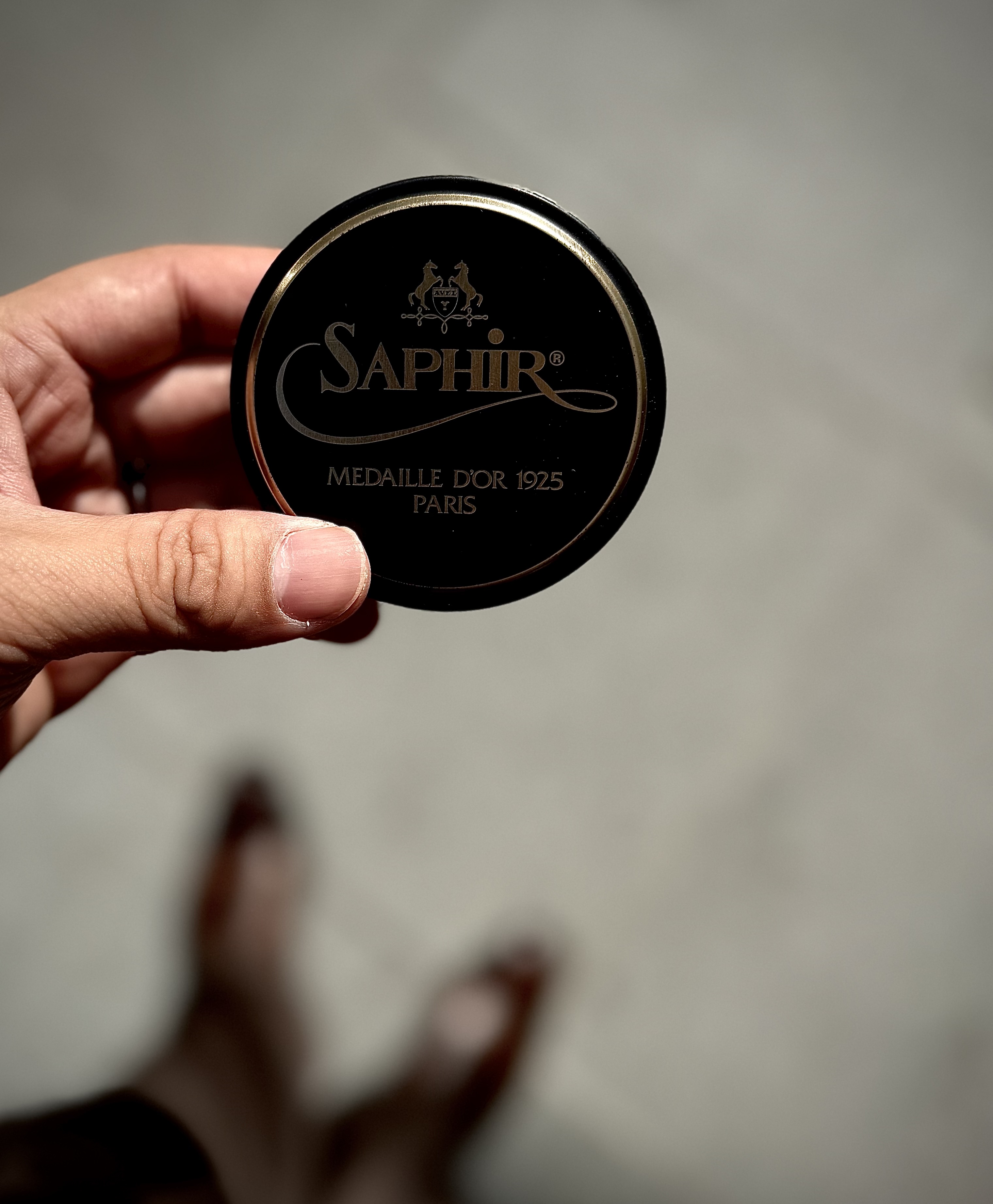
Polish — real polish, like Saphir Médaille d'Or — needs heat to bond with the leather's pores.
Machine buffers generate heat too, but it is indiscriminate. Hand-polishing drives the wax into the pores of the leather rather than skimming across them.
The difference: one coat flakes off in a week. The other becomes part of the shoe.
The Angle Nobody Talks About
Leather is not flat. A shoe is a sculpture — curved at the toe, angled at the waist, complex around the heel cup.
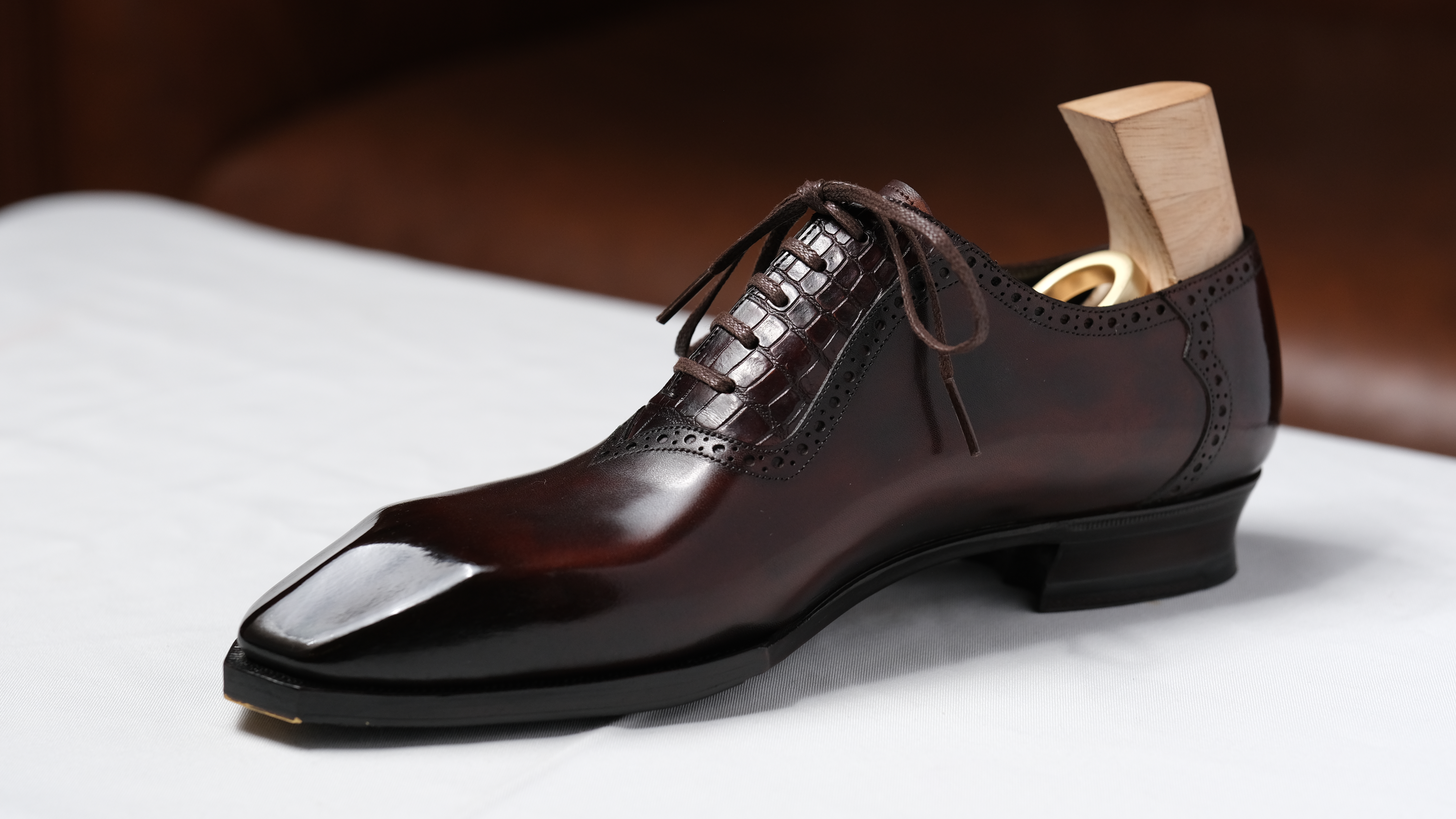
Mirror shine is achieved not just by polishing well, but by polishing at the exact angle that allows light to find a flat, consistent plane.
A craftsman rotates the shoe in his hand constantly, reading the reflection as he works, adjusting until the light bends just right.
No machine rotates the shoe. The shoe feeds into the machine. The relationship is backwards.
"Mirror shine is not speed. It is patience made visible."
What Gets Lost in the Machine
When a pair of shoes spends twenty minutes in the hands of someone who knows leather — who notices the grain direction, who sees the original patina and works with it rather than over it — the shoe comes back different.
Not just cleaner. More itself.
Machine polishing makes every shoe look the same: the fast, high gloss of something processed. Hand polishing makes a shoe look like that shoe — its character intact, its story still visible beneath the shine.
At Marcher
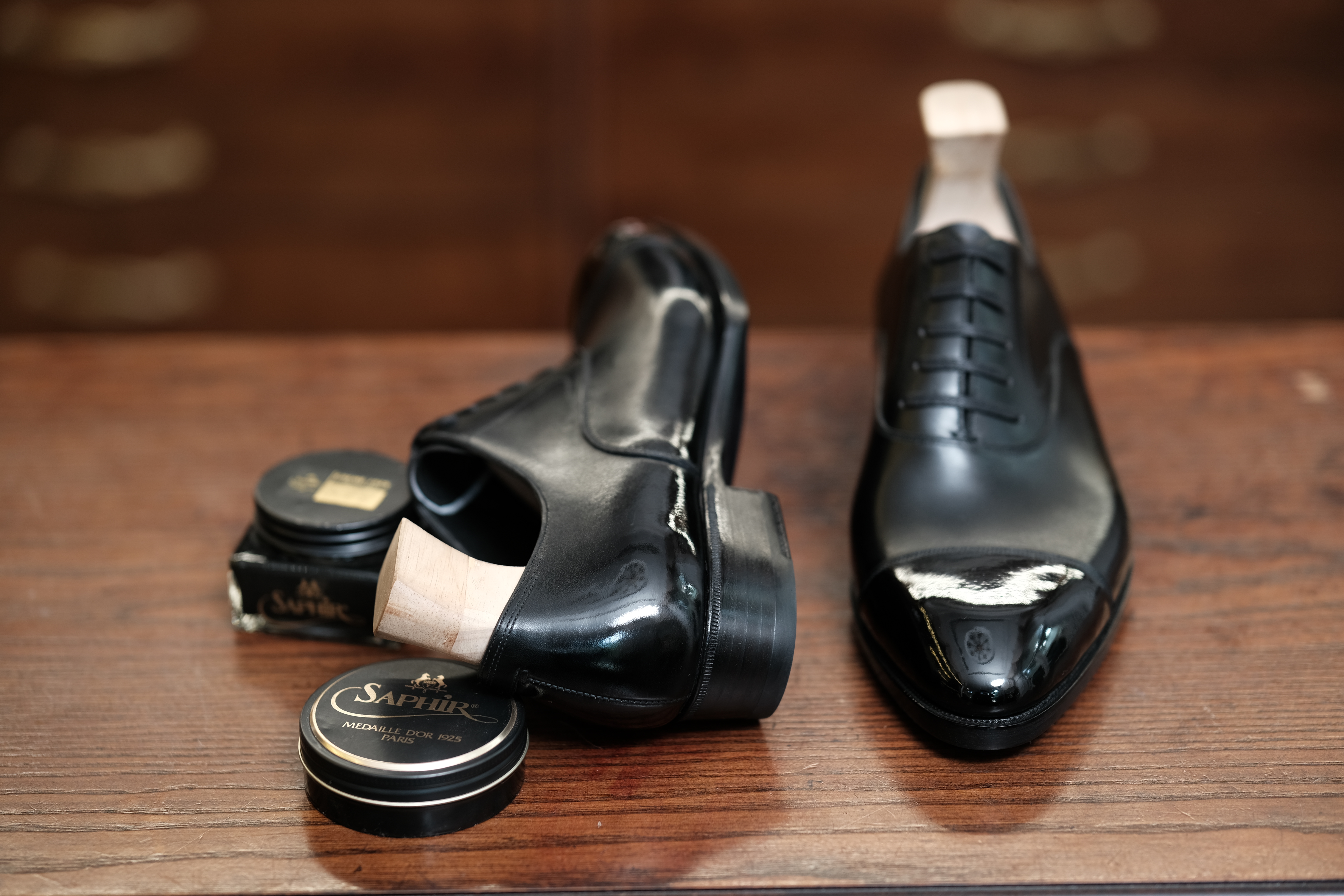
We use Saphir Médaille d'Or wax polish, a pure bone applicator, and a sequence of cotton cloths graded from coarse to fine.
The process takes between fifteen and forty minutes depending on the leather and the existing condition of the shoe.
We do not own a buffing machine.
Craft Note
"Every pair that leaves our workshop carries something invisible — time. The shine will fade eventually. The care behind it won't."
— Marcher Saigon
Footwear featured in this article by Timber Lee III